‘My Budgie Will Only Eat Seed’
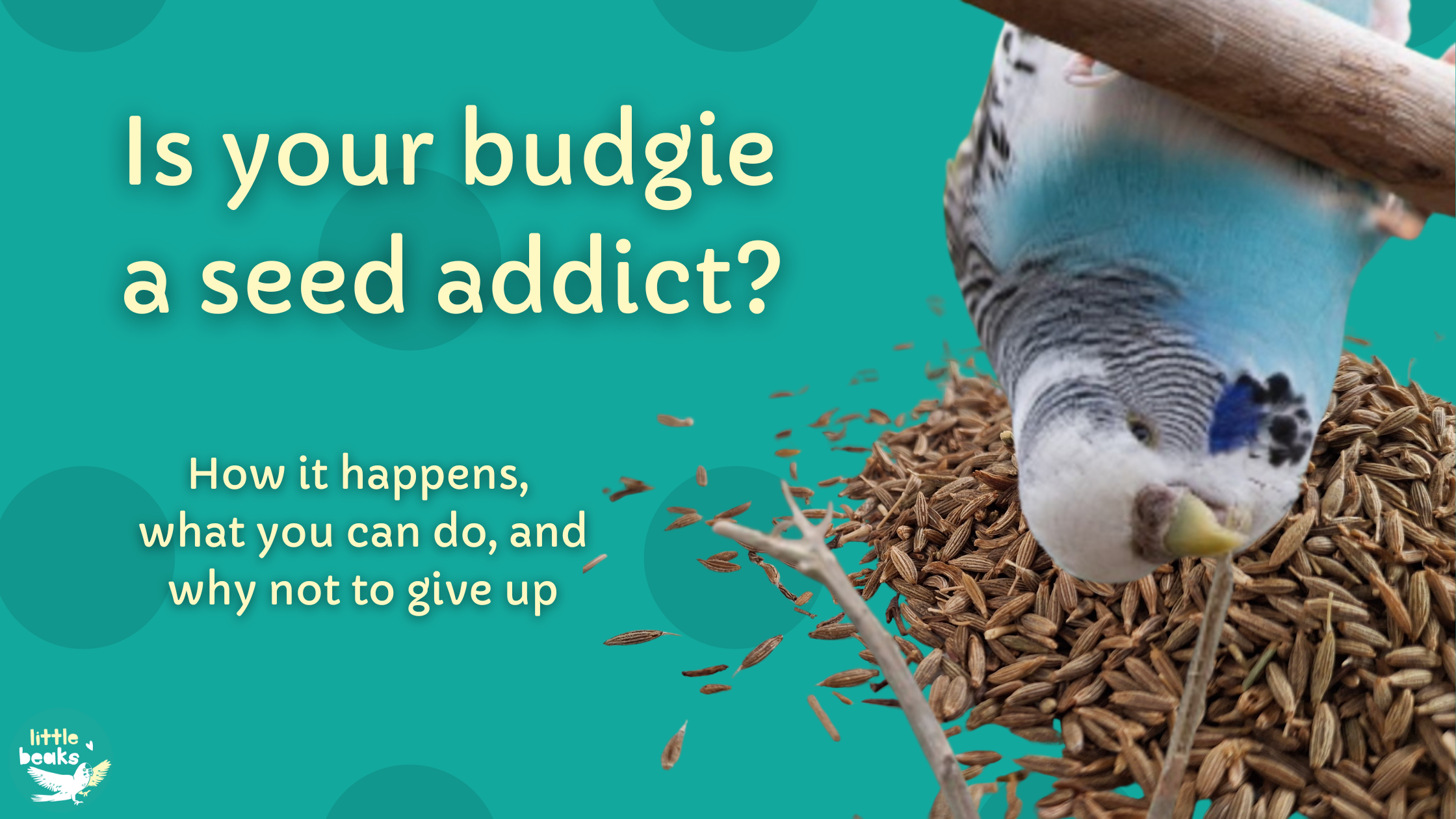
If your budgie refuses anything that isn’t seed, you’re not alone.
It’s one of the most common questions we get—and one of the most frustrating things for new bird families.
Why it happens
In the wild, budgies spend their days foraging across grasslands and scrub. They nibble at fresh grass seed heads, young shoots, and bits of native herbs… not the dry, shelf-stable seed mix found in most cages.
In captivity, though, things start very differently. Many commercial breeders and pet shops raise young birds on seed only, because it’s cheap, tidy, and keeps stock turnover simple. Chicks grow up believing that’s what food is. By the time they reach a home, fresh greens completely unknown.
That early imprinting sticks. Birds learn what’s ‘safe’ to eat by watching their parents and clutch-mates. If those role models never saw vegetables, the new family member won’t recognise them as food either.
Why it matters
A seed-only diet might look fine for a while, but it’s like living on fast food: too much fat, not enough vitamins or variety. Over time, it can lead to liver disease, obesity, and other preventable health issues.
The good news? With patience and the right approach, most birds can learn to eat better.
Important note: We are not veterinarians and this is not a substitute for professional advice. If you have questions or concerns about your budgie’s personal diet, please consult your avian vet.
Helping your budgie discover fresh food
Think of it as teaching a toddler to like broccoli: slow, curious exposure works best.
Important: Never remove seed completely or try to ‘force’ your bird to eat something new by withholding their regular food. Budgies will starve themselves rather than eat unfamiliar food, which can be life-threatening. Seed should always remain available.
Now, here’s how to gently expand their menu:
Start small and familiar
Mix tiny pieces of finely chopped greens into their usual seed dish. They’ll ignore it at first, but they’ll start to associate the smell and sight with feeding time.Make it social
Budgies learn by watching. If one bird tries something, the rest often follow. Even showing them a short video of budgies eating fresh food can sometimes trigger interest.Experiment with texture and presentation
Hang leafy sprigs (spinach, bok choy, celery tops, native grasses) from the cage roof or clip them to perches. Offer grated carrot, corn kernels, or herbs scattered on a clean plate. Curiosity often wins.Offer at the right times
Try fresh foods first thing in the morning when they’re hungriest, before refreshing their seed for the day.Keep it routine
Re-offer daily, even if they ignore it. It can take weeks or even months before a bird decides a food is ‘safe’. Consistency is key.
Common barriers (and why people give up)
‘They just throw it on the floor!’
That’s exploring, not rejecting. Many budgies play with new foods before tasting them.‘They won’t even look at it.’
New shapes and colours can be scary. Try placing the same leaf outside the cage for a few days so it feels less threatening.‘It’s such a waste.’
It can feel discouraging to see untouched greens go to waste, but every exposure builds familiarity. Compost what they don’t eat and think of it as training time, not wasted food.‘Seed is what they’ve always eaten.’
True, but that’s because of how they were raised, not because it’s what’s healthiest. In nature, fresh growth is part of every meal.
In short
Seed should be always available but never the only option. Your budgie isn’t being stubborn; they’re following the only pattern they’ve ever known. With gentle persistence, positive association, and some creativity, you can help them rediscover what their wild cousins already know—that fresh food is delicious.
Want to receive more updates, insights, and other extras from Little Beaks? Join the flock here.