
Companion Birds: Unpopular
and Controversial
Opinions
(That we need to start talking about)
Some of these ideas will challenge what’s commonly accepted in the companion bird world. That’s the point—not to provoke for the sake of it, but to encourage better welfare, better understanding, and better outcomes for the birds in our care.
1. Birds should never have been taken from the wild to become pets
This one goes deep.
Before anyone reacts—this isn’t about not loving our birds. Many of us couldn’t imagine life without them.
But in an ideal world, birds would never have been captured, bred, and adapted for life in captivity.
Even generations removed, captive birds still retain their wild instincts. The difference is that many no longer have the opportunity to express them. When those instincts are suppressed, we often see behavioural and psychological issues emerge.
We’ve created a situation where birds must adapt to environments they were never designed for—and we’re still learning how to do that responsibly.
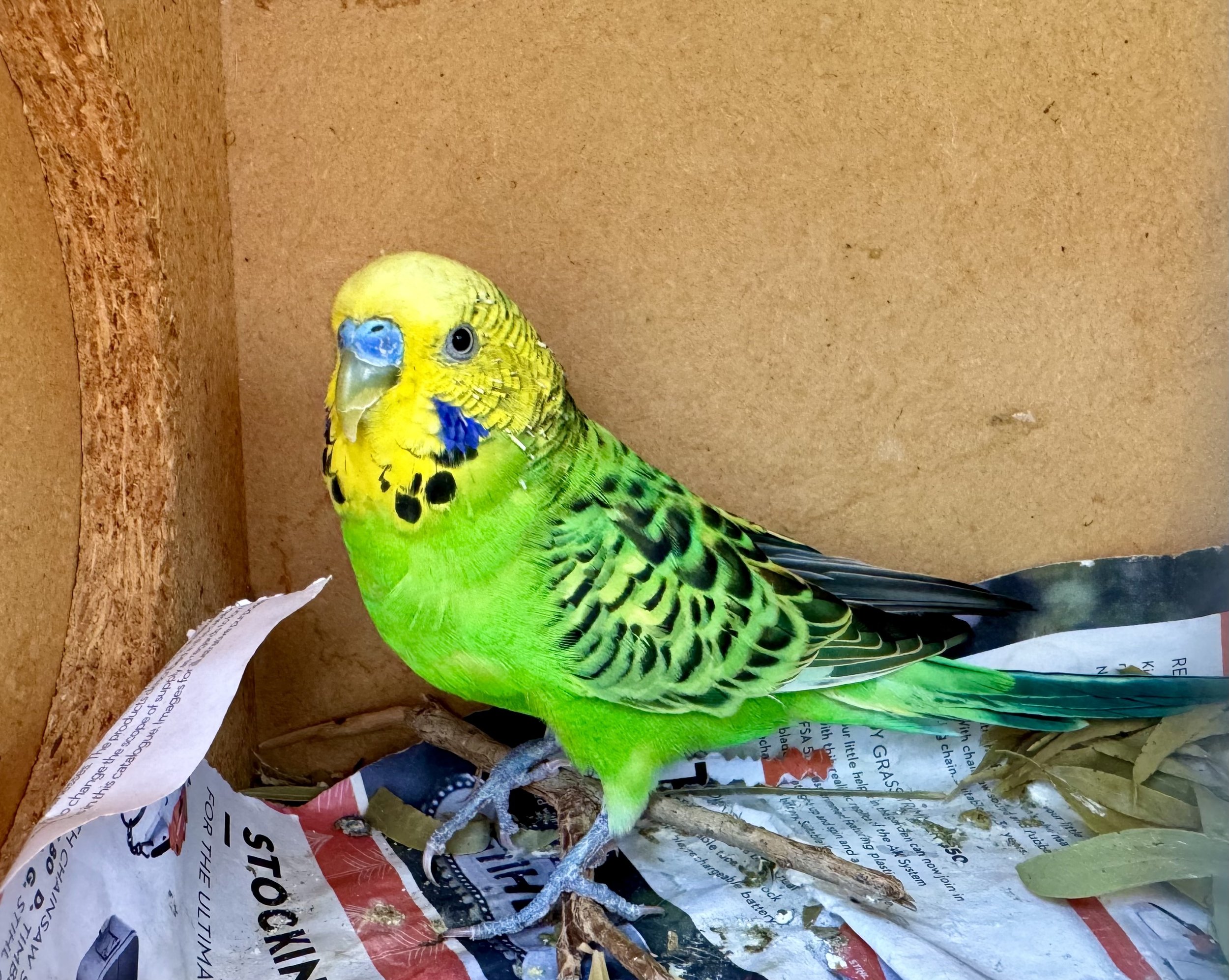
2. Budgies are not ‘starter birds’
This label does more harm than people realise.
Budgies (and other small birds) are often recommended as beginner pets because they’re:
cheaper
smaller
perceived as low maintenance
But this creates dangerous assumptions:
that they’re easier to care for
that their needs are simpler
that they’re less intelligent or emotionally complex
that they’re replaceable
In reality, budgies have complex physical, mental, and social needs. When those needs aren’t met, preventable health and behavioural issues often arise.
Their lower cost also means people are less likely to invest in veterinary care—and more likely to replace them if something goes wrong.
No animal should be treated as disposable.
3. Wing clipping is not a neutral choice
This is one of the most divisive topics—and often dismissed as ‘personal preference’.
But removing a bird’s ability to fly isn’t just a lifestyle choice. It removes one of their most fundamental natural behaviours.
Flight is essential for:
physical health
muscle and bone development
confidence
mental wellbeing
Clipping can lead to:
anxiety and reduced confidence
forced dependency on humans
increased risk of obesity
injury (especially when only one wing is clipped)
Clipping for taming is particularly concerning. It creates dependence rather than trust.
Birds don’t need to be clipped to form bonds. In fact, flight often strengthens them.
4. Bird ownership should require licensing and education
Birds are not low-maintenance pets.
They have:
specialised dietary needs
complex behavioural requirements
long lifespans
high sensitivity to environment and stress
Most people learn this after getting a bird.
That learning curve often comes at the bird’s expense.
Requiring basic education—and possibly licensing—before ownership would prevent a significant number of welfare issues.
5. Most cages and accessories sold in pet stores are unsuitable
This is widely known—and still widespread.
Common issues include:
cages that are too small
cages with poor shape (round, narrow, or tall instead of wide)
“starter” setups that don’t meet basic needs
unsafe accessories
Rope toys, for example, are still commonly sold despite known risks of crop impaction and death.
The bigger issue is trust. People assume that if something is sold in a pet store, it must be safe.
Unfortunately, that’s not always the case.
6. Birds should not be sold or adopted alone by default
This is already law in some places—and for good reason.
Birds are flock animals. Their entire behavioural and emotional framework is built around social living.
Removing a bird from its flock and placing it alone in a new environment can be:
distressing
confusing
psychologically damaging
Yes, some single birds adapt well—especially when deeply integrated into a human household.
But many behavioural issues we see in companion birds—fear, biting, withdrawal—can stem from isolation.
A second bird shouldn’t be an afterthought. It should be the starting point.
7. Most bird diets are still fundamentally inadequate
Seed-heavy diets are still the norm—and still one of the biggest contributors to poor health.
Even when people are trying to do the right thing, misinformation around diet is everywhere.
Diet isn’t just about survival—it’s about long-term health, enrichment, and natural behaviour.
8. ‘Tame’ often means dependent—not confident
A bird that relies heavily on a human for comfort, stimulation, or security isn’t necessarily well-adjusted.
In many cases, what looks like a strong bond is actually dependence. Parrots are social animals that are meant to interact, explore, and engage beyond a single individual. When all of that centres on one person, it can limit their confidence and ability to cope independently.
True confidence looks like:
curiosity
independence
the ability to make choices
Not reliance.
9. Small birds are often given the least welfare consideration
Because they’re:
cheaper
quieter
more common
They’re also more likely to be:
under-stimulated
under-treated medically
housed in poor conditions
Welfare shouldn’t scale with price.
10. The bird trade still prioritises convenience over welfare
From breeding practices and transport, to how birds are displayed and sold—many systems are built around efficiency, not wellbeing.
Until that changes, many of these issues will continue.
In short: None of this is about blame.
Most people care deeply about their birds—and are doing the best they can with the information they have.
But the reality is, the system birds exist in isn’t designed around their needs, and we’re still learning how to do better.
Like this article?
Join Aflight With the Flock for:
Bird welfare insights
Sanctuary updates
New resources and articles