
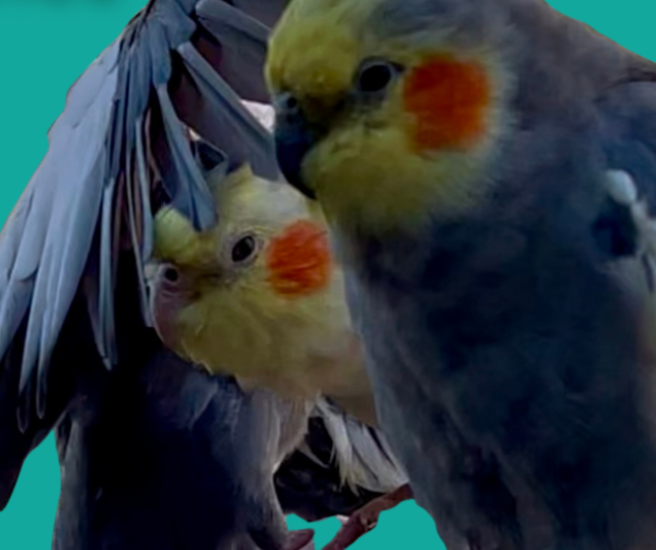
Guide to Safely Rehoming
Can Little Beaks take my bird?
Not at the moment, in most cases. We've paused general intake.
We're a small sanctuary in Western Australia, and we're currently only able to consider emergencies—situations like homelessness, family violence, or a serious health problem that makes caring for a bird impossible. Even then, we can't always say yes. It depends on the species, where the bird is, and whether we have room.
If that's your situation, get in touch and tell us what's happening.
If it isn't, this guide is the more useful thing. Most birds are rehomed by their owners, not by rescues—and a careful owner who knows what to ask will usually find a better home than a rescue would, because you know your bird.
What we can't help with
taking a bird because you're moving, changing jobs, or your circumstances have shifted
rehoming outside Western Australia
species outside budgies, weiros/cockatiels, lovebirds, plumhead parrots, doves, finches, canaries, kakarikis and grass parrots
finding a home for you, or matching you with someone
We don't adopt birds out, and we don't hold a waiting list of people looking for one.
None of this is a judgement on why you're rehoming. People rehome for good reasons, and doing it carefully is the responsible thing.
Jump to:
Rehoming a bird is rarely a simple decision.
For many people, it comes after trying to make things work—adjusting routines, changing environments, and doing what they can with the information they have.
Rehoming isn’t a failure. But it does carry risk—and the way it’s handled can make a significant difference to a bird’s long-term wellbeing.
This guide is designed to help you through the process, from deciding whether rehoming is even necessary, to what to consider in a new home, as well as how to identify and navigate around red flags.
Before You Rehome
Before moving forward, it’s worth stepping back.
Ask yourself:
is this a temporary situation that could be managed another way?
are there changes to environment, routine, or enrichment that haven’t been tried yet?
has advice been sought from an avian vet or experienced carer?
Birds are highly sensitive to change. A new home means new people, new sounds, and often the loss of familiar bonds.
If rehoming is necessary, the goal is not just to find a new home; it’s to find the right one.
When Rehoming May Be the Right Decision
Rehoming can be appropriate when:
you can no longer meet the bird’s physical or emotional needs
the bird requires care beyond your capacity (time, experience, medical)
there are ongoing safety concerns
major life changes cannot be adapted to
Handled properly, rehoming can be a responsible and welfare-focused decision.
Common Risks to Avoid
This is where many birds fall through the cracks.
Be cautious of:
listing birds on general marketplaces without screening
giving birds away quickly to reduce stress or urgency
placing birds with people who have unrealistic expectations
minimising behavioural or care challenges
These situations often lead to:
repeated rehoming
unsuitable environments
neglect or poor handling
What a Suitable Home Looks Like
A suitable home is not just someone willing to take the bird.
Look for:
understanding of species-specific needs
appropriate housing (space, layout, enrichment)
appropriate companionship
willingness to provide veterinary care
realistic expectations about behaviour, noise, and time commitment
long-term stability
Rehoming a Bonded Pair or Group
Birds who have lived together often form strong, lasting bonds. Budgies in particular are intensely social—in the wild they live in flocks and stay in close, stable pairs within them. Separating bonded birds can cause real distress: calling, searching, appetite changes, and withdrawal that can last weeks.
If your birds are bonded, keeping them together is usually the right call.
It can also make rehoming harder, and it's worth knowing that upfront:
fewer homes can take a group than a single bird
it will take longer, sometimes considerably
you may be asked to split them, repeatedly
The pressure to break up a group usually comes from people who mean well. Someone will offer to take ‘just one’. Someone else will say the birds will adjust. Some will, and some won't, and you can't tell in advance which.
Holding the line on this is one of the most protective things you can do. It's also the part that takes the most patience.
If splitting genuinely becomes unavoidable—for example, if no suitable home for the group emerges over a long period—try to keep bonded pairs within the group intact rather than separating every bird.
Screening Potential Homes
A good home will be open to questions.
Ask things like:
what experience do you have with birds?
what does your setup look like?
what will the bird’s daily routine be?
how do you approach diet and enrichment?
Where possible:
request photos or videos
take time to assess responses
You’re not looking for perfection—but you are looking for awareness and preparedness.
Pay attention to how someone answers, not just what they answer. Detail, questions of their own, and honesty about what they don't know are all good signs. Confidence without specifics is not.
Where you can, meet at their home rather than a car park. Seeing the space tells you more than any answer will.
Red Flags
Most people enquiring are exactly who they say they are. These are the patterns worth slowing down for.
About the setup
vague or shifting answers about where the bird will live
reluctance to send photos of the cage or room
describing a cage by brand or price rather than size
the bird will be "outside" with no further detail
About intent
asking whether birds are a proven pair, or whether they've bred before
asking about sex more than about temperament
wanting a bird as a gift or a surprise for someone else
planning to keep the bird alone as company for a person
About the approach
wanting to collect today, or pressing for a fast handover
offering more money to be moved up the queue
unwilling to give a phone number or meet at their home
irritation at being asked questions
That last one matters most. A good home does not mind being asked. Someone who is genuinely prepared will usually be pleased you're checking — they'd want the same if it were their bird.
What to do when something feels off
You don't owe anyone an explanation. "I've decided to go with someone else" is a complete sentence. You can stop replying at any point, right up until the moment the bird leaves.
Preparing Your Bird
Before rehoming:
share accurate information about diet, behaviour, and history
provide familiar food and items to ease the transition
be honest about any challenges
The right home is one that understands what to expect.
Supporting a Smooth Transition
If possible, allow for a transition period.
This may include:
gradual introduction to the new environment
maintaining familiar routines
providing guidance to the new carer
Expect some adjustment:
withdrawal
changes in behaviour
increased caution
This is normal.
A Note on ‘Free to Good Home’
Advertising a bird as free is risky. It can attract impulse responses, reduce the sense that this is a serious commitment, and lead to placements nobody thought through.
Charging a fee is the usual response to this—and it does help with some of it. A price makes people pause, and it filters out the person who saw a photo and acted on a whim.
But it's worth being clear about what a fee can't do.
A fee does not stop someone reselling your birds. Anyone planning to onsell will pay it and recover it. The same goes for someone wanting birds to breed from—a small cost is not a deterrent when there's money at the other end.
The fee filters out impulse. Screening filters out everything else.
Whether to charge is your decision. Either way, the questions you ask will do far more to protect your bird than the price you set.
In Short
Rehoming should never be rushed. The goal isn’t just to find a home—it’s to find a suitable, stable, and informed one.
Taking the time to assess, prepare, and support the process can make a significant difference to a bird’s long-term wellbeing.
Need Support?
If you’re unsure where to start or would like guidance, Little Beaks may be able to help—contact us here.