
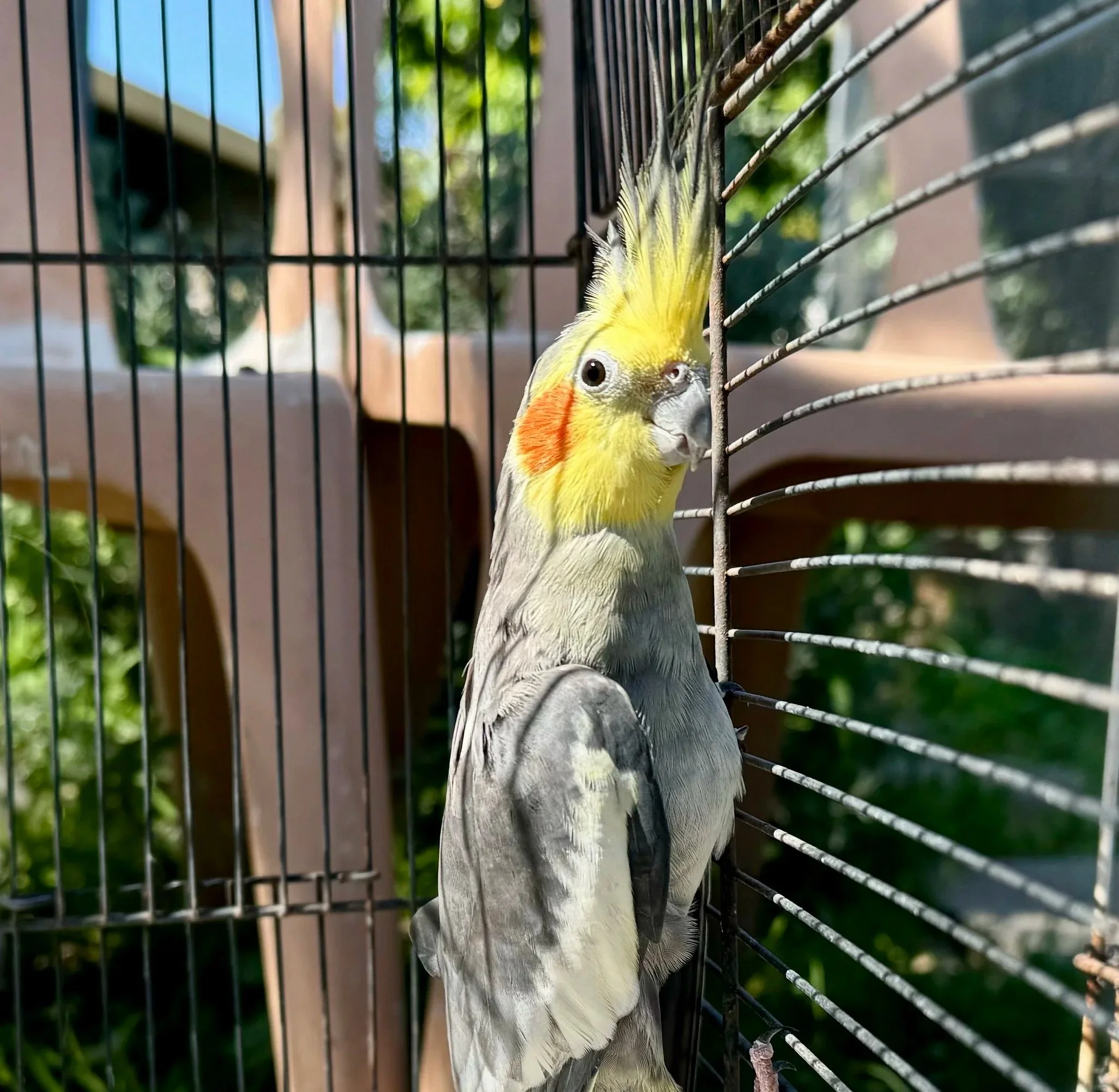
Cage Size Matters
The myth
‘My bird seems happy, so the cage must be big enough.’
It’s an easy assumption to make. Your bird eats well, chirps, plays, and greets you when you walk past—so surely their setup can’t be that bad, right?
Unfortunately, behaviour alone isn’t a reliable indicator of welfare.
Why this myth persists
Small cages have been normalised for decades. Pet shops, packaging, and even some care guides still show birds housed in spaces barely wider than their wingspan.
Birds are also incredibly good at coping. They adapt, conserve energy, and mask discomfort—not because they’re thriving, but because they have no choice.
Quiet, compliant birds are often mistaken for ‘content’ ones.
What birds actually need
In the wild, small birds spend most of their day:
Flying short but frequent distances
Foraging across wide areas
Choosing where to perch, rest, and socialise
Avoiding boredom and stress through movement
A cage that only allows hopping from perch to perch removes almost all of that choice.
Flight isn’t a luxury. It’s a biological need.
Signs a cage may be too small
Some effects are subtle and often misread:
Low activity levels (‘they’re just calm’)
Excessive sleeping during the day
Over-attachment to one perch or corner
Repetitive behaviours
Sudden weight gain or loss
Muscle loss despite eating normally
These aren’t personality quirks; they’re often environmental responses.
Myth vs Fact
Myth: ‘If my bird seems happy, the cage must be big enough.’
Fact: Birds are excellent at masking stress. Coping behaviours are often mistaken for contentment.
Myth: ‘Height matters more than width.’
Fact: Most small birds fly horizontally. Width allows movement; height alone does not.
Myth: ‘Out-of-cage time makes up for a small cage.’
Fact: A cage is a bird’s primary living space. Temporary freedom doesn’t compensate for long hours of restriction.
Myth: ‘My bird doesn’t fly anyway.’
Fact: Birds often stop flying because they don’t have space. Flight ability declines when it isn’t used.
Myth: ‘They’ve always lived like this and seem fine.’
Fact: Long-term restriction can lead to muscle loss, obesity, behavioural issues, and reduced resilience over time.
Cage recommendations (general guidance)
There’s no one-size-fits-all cage, but there are minimum standards that support wellbeing rather than just containment.
What to prioritise
Width over height
Look for cages that allow multiple uninterrupted wingbeats in a straight line.
Horizontal bars
These encourage climbing, movement, and natural exercise.
Clear flight paths
Perches, bowls, and enrichment items should not block movement.
Zoning
Birds should be able to:
Move away from food
Choose different perches
Rest without disturbance
As a general rule of thumb
Your bird should be able to fully extend and flap their wings without touching anything
There should be space to fly between perches, not just hop
Adding enrichment should not make the cage feel crowded
If adding foliage or other enrichment makes the cage unusable, the cage is too small.
Common mistakes to avoid
Tall, narrow cages marketed as ‘flight cages’
Round cages (disorienting and restrictive)
Relying on ‘recommended for X species’ labels instead of checking dimensions
Treating minimum sizes as ideal setups
Quick check: Is this cage big enough?
A cage is likely too small if:
Your bird can’t fully flap their wings freely
Perches are placed so close that flight isn’t possible
The bird spends most of their time in one spot
Out-of-cage time is used to justify the cage size
A cage is supporting wellbeing if:
The bird uses the entire space
Flight between perches is possible
Zones are clearly separated
The layout can change without blocking movement
If you’re unsure, that uncertainty alone is often a sign the cage is at—or below—the bare minimum.
Common pushback
‘I can’t afford a bigger cage’
That’s understandable. But improvements don’t always need to be immediate or brand new. Second-hand cages (ensuring proper cleaning/disinfecting), gradual upgrades in width, or repurposed aviary-style setups can all help.
‘I rent/don’t have room’
A wider footprint often fits better than a tall cage and offers far more benefit to the bird.
‘My bird doesn’t fly’
Many birds stop flying because they don’t have room to practise. Providing space gives them the option to fly again, at their own pace.
‘They’ve always lived like this’
Improving a bird’s environment isn’t an admission of past failure. It’s an act of care.
What about aviaries or larger setups?
Bigger is almost always better, when done safely. Larger spaces allow:
True flight
Natural foraging behaviour
Social choice and distance
Even modest increases in width can make a meaningful difference.
The takeaway
A small cage doesn’t just limit movement—it limits choice, stimulation, and can impact long-term health.
If we truly want birds to thrive, not just survive, space has to be part of the conversation.
Because ‘fine’ shouldn’t be the goal.
Like this article?
Join Aflight With the Flock for:
Bird welfare insights
Sanctuary updates
New resources and articles