
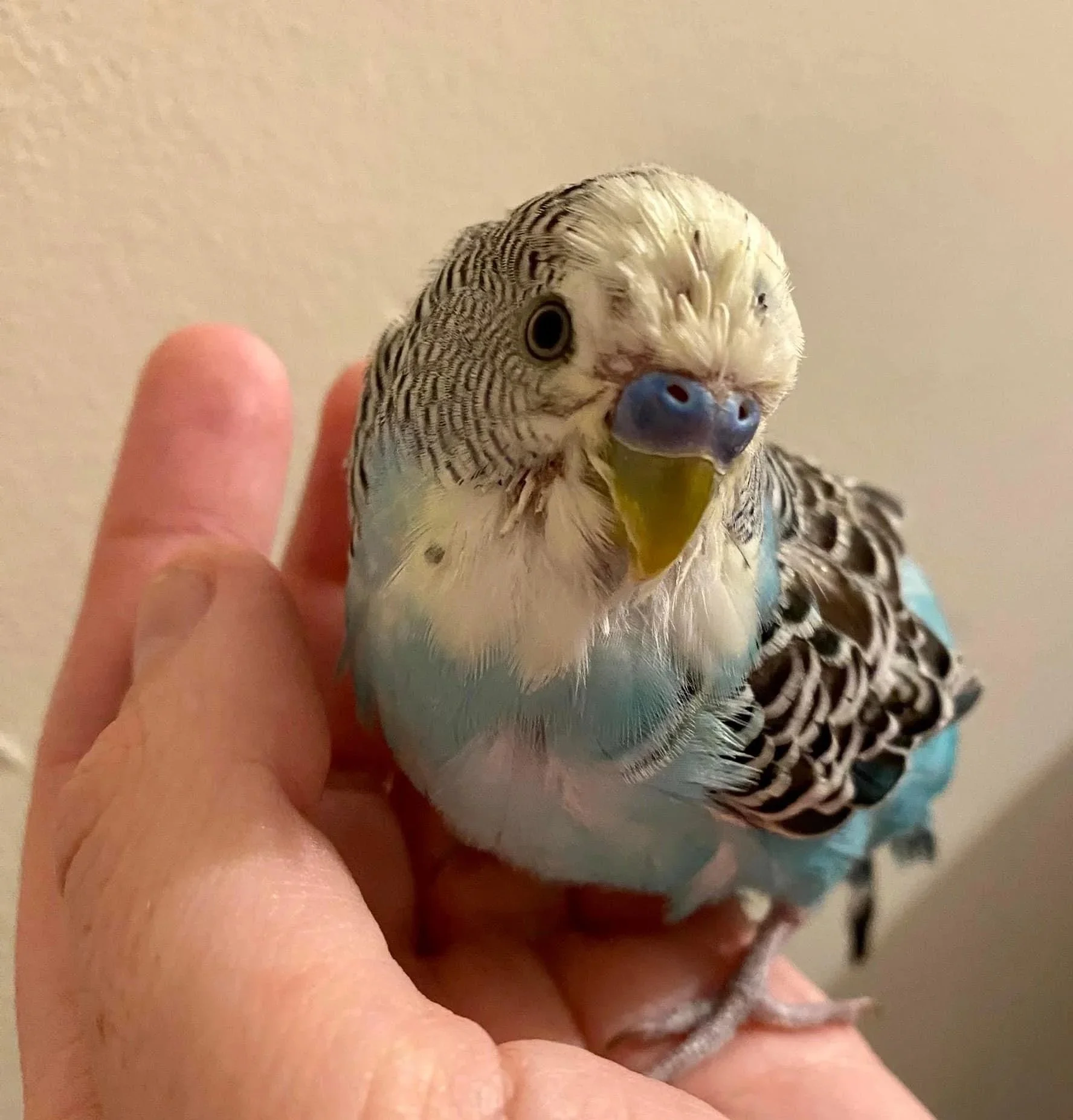
Busting the Myth:
‘Budgies are fine on their own’
One of the most common beliefs in pet bird care is that budgies are perfectly happy living alone, as long as they receive enough attention from humans.
And on the surface, it can certainly look that way.
A single budgie may:
follow their person constantly
call out when they leave the room
appear deeply affectionate
seek interaction all day
prefer humans over other birds
Many people interpret this as proof that their bird doesn’t need avian companionship.
But strong dependence on humans is not necessarily the same thing as social fulfilment.
In fact, some of the behaviours people associate with a ‘well-bonded’ single budgie can develop because the bird has no other meaningful social outlet available.
Why single budgies became so normalised
For decades, single budgies were commonly marketed as:
easier to tame
more affectionate
more talkative
more bonded to humans
simpler for beginners
And commercially, that made sense.
A single bird is easier to sell than explaining:
flock dynamics
larger housing needs
introductions and quarantine
long-term social care
or the reality that budgies are highly social animals
Selling one bird, one cage, and a simple idea of companionship lowered the barrier to purchase significantly.
There was also a powerful emotional reward for owners.
A socially isolated bird often becomes extremely human-focused, which can feel incredibly meaningful:
‘they only want me’
‘we have such a special bond’
‘they love spending all their time with me’
But humans and budgies do not fulfil the same social role. Even the most caring owner cannot fully replace another budgie.
As the German Animal Welfare Federation states:
‘Budgerigars can only live out their social behavior with conspecifics. They preen each other's feathers. They feed each other. They play together.’
What humans can’t realistically replicate
Budgies are flock animals.
In natural settings, they spend much of their lives surrounded by other budgies:
flying together
foraging together
resting together
communicating constantly
observing and learning from one another
Much of this interaction is subtle enough that humans barely notice it.
Things like:
quiet contact calls
synchronised movement
mutual preening invitations
social reassurance
tiny negotiations over space and food
shared alert behaviour
learning confidence from other birds
These interactions happen throughout the day, often continuously.
Even highly attentive humans still sleep, leave the house, work, become distracted, communicate differently, move differently, and interact on a completely different social wavelength.
A human relationship can absolutely be enriching and meaningful, but it is usually not the same as access to another budgie.
‘But my bird doesn’t like other birds’
This can happen, especially in birds who:
were isolated young
became heavily human-dependent
lacked proper socialisation
had negative experiences with other birds
or simply need slow, careful introductions
Companionship is not as simple as placing two random birds together immediately. Some birds require patience, gradual introductions, and appropriate matching.
But it’s also common to see previously isolated birds begin displaying behaviours that were largely absent once they gain appropriate companionship:
more natural communication
flock interaction
mutual grooming
calmer resting behaviour
social play
increased confidence
shared exploration
Sometimes the difference is immediate.
Surviving is not always thriving
One reason this myth persisted for so long is because budgies can survive in isolation while appearing outwardly functional.
They may still:
eat
vocalise
interact with humans
learn words
appear energetic
But surviving and thriving are not necessarily the same thing.
Modern welfare understanding increasingly recognises that behavioural fulfilment matters too.
The RSPCA notes that pet birds should ideally be housed in compatible groups or pairs so their social needs can be properly met.
Because the goal shouldn’t be making birds our bonded companions. It should be helping them experience as much of their natural social world as captivity safely allows.
Further reading
RSPCA Australia — Housing and social needs for pet birds
German Animal Welfare Federation — Budgerigar welfare and social behaviour
Like this article?
Join Aflight With the Flock for:
Bird welfare insights
Sanctuary updates
New resources and articles